
WHAT YOU NEED TO KNOW
Navigating the corporate memory of the virtual boy reggie fils-aime connection became a famous rite of passage for Nintendo employees, highlighting how a classic hardware disaster directly informed modern executive leadership and product development.
- Released in 1995, the system sold fewer than 770,000 units globally before being cancelled within six months.
- Former Nintendo of America president Reggie Fils-Aimé utilized the failed console as a core corporate case study for product positioning and retail pricing.
- The tabletop hardware featured a monochromatic red light-emitting diode display that caused significant eye strain and neck fatigue for players.
While the hardware was a commercial failure, its stereoscopic 3D concepts directly laid the technical groundwork for the Nintendo 3DS handheld released in 2011.
How the Virtual Boy Almost Ruined a Nintendo Career
The Interview Story Involving Reggie Fils-Aimé
When prospective employees interviewed at Nintendo of America (NOA) after Reggie Fils-Aimé joined as executive vice president of sales and marketing in 2003, defending failed hardware was a dangerous move. Candidates who tried to pitch unprompted revival ideas for obsolete platforms often found themselves on the defensive. Former Treehouse localizer Mike Drucker famously recalled approaching Fils-Aimé in an office restroom during his early weeks at the company to enthusiastically pitch porting Virtual Boy software to the Nintendo 3DS, realizing only afterward how close he had come to a major professional blunder.
Within Nintendo executive culture, unprompted pitches that ignored commercial realities demonstrated a lack of corporate awareness. Corporate structure required American staff to work through established localization channels rather than approaching high-level executives directly.
- Praising commercial missteps during job interviews was viewed by management as a lack of business acumen.
- Directly pitching software concepts to executive leadership bypassed established localization protocols between American offices and Japanese headquarters.
- Personal nostalgia for obsolete hardware did not align with Nintendo of America’s retail profitability goals.
Reggie’s Reaction to Defending Nintendo’s Flops
Reggie Fils-Aimé treated workplace interactions and executive interviews as tests of business logic. He expected staff members to candidly acknowledge past product failures rather than defend them out of misplaced brand loyalty. As documented in historical executive profiles on MobyGames, Fils-Aimé maintained that recognizing corporate mistakes was essential for protecting overall brand equity.
When employees attempted to justify the tabletop red console, Fils-Aimé countered with hard retail figures and consumer satisfaction metrics. He consistently stressed that enthusiasm for classic gaming history must never blind staff to commercial metrics. His firm stance ensured that the company learned from past errors rather than repeating them.
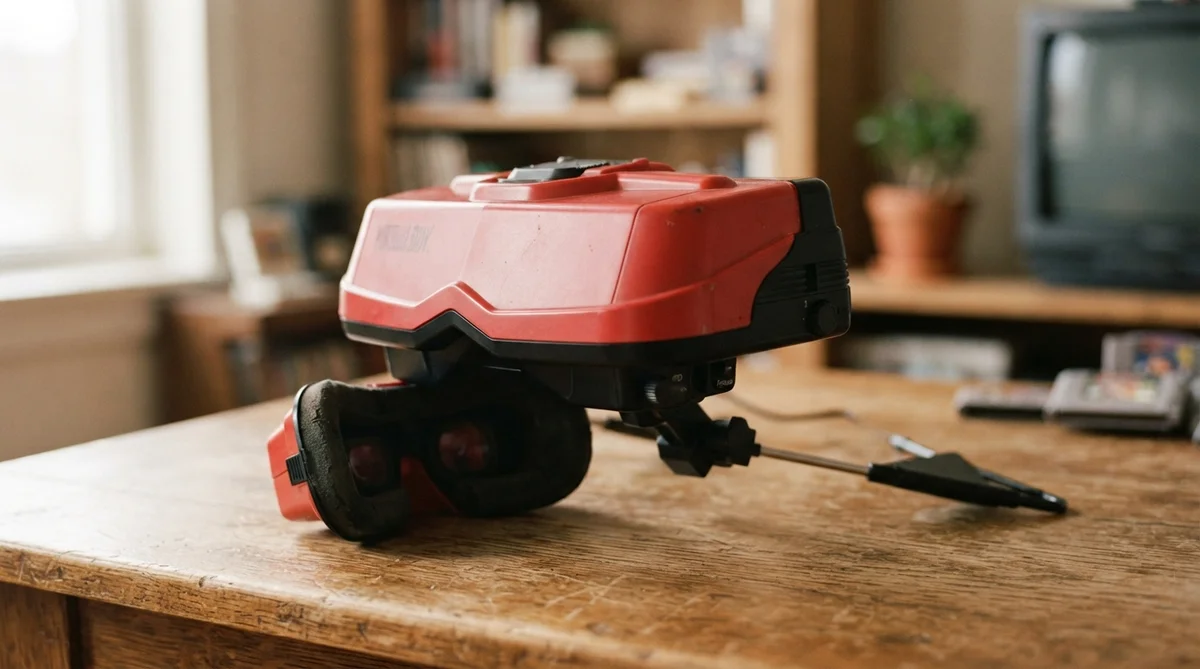 retro Virtual Boy console with its red and black visor and stand, sitting on a textured wooden surface in soft daylight.” loading=”lazy” />
Virtual Boy Reggie Fils-Aime: Why Was the System Such a Sensitive Topic?
Critical Flaws of the Virtual Boy Hardware
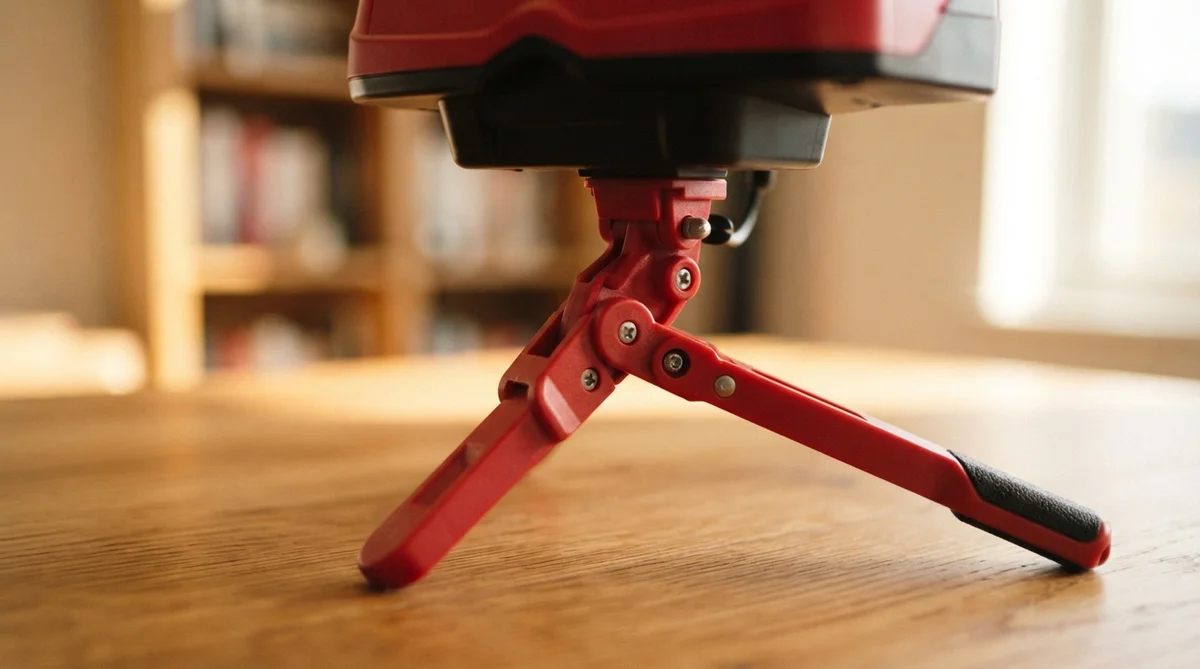
The Virtual Boy suffered from fundamental mechanical and ergonomic engineering choices that alienated mainstream consumers upon arrival. According to technical hardware archives preserved on the Internet Archive, the system was originally intended as a portable head-mounted display, but safety concerns forced Nintendo to mount the heavy unit on an awkward tripod stand.
This design required players to hunch over a table, resulting in immediate neck strain during extended play sessions. The optical setup relied on rapidly vibrating mirrors that produced visible motion artifacts if the console was bumped.
- Monochromatic Screen: High costs for green and blue LEDs forced the team to use red-only displays, causing severe visual fatigue.
- Poor Ergonomics: A rigid tabletop tripod forced players into uncomfortable physical postures.
- Health Warnings: Aggressive warning labels regarding potential eye damage frightened parents away from buying the console for children.
- High Retail Price: Debuting at $179.95 in 1995, the machine was far too expensive for its limited software lineup.
Commercial Failure and Brand Damage
The system severely tarnished Nintendo’s reputation as an invincible hardware manufacturer right when the original Sony PlayStation launched in 1995. Retailers were left with massive surplus inventory that required drastic markdowns to clear from store shelves.
The platform spent fewer than 180 days on the North American market before Nintendo pulled all marketing support. When examining reggie fils aime nintendo history, this commercial misstep served as the primary example of how poor product positioning can damage consumer trust.
The History of Nintendo’s Misguided 3D Experiment
Gunpei Yokoi’s Ambition vs. Market Reality
Game Boy creator Gunpei Yokoi envisioned the Virtual Boy as an innovative product that would isolate players in a private three-dimensional (3D) gaming environment. However, corporate pressure to launch before rival platforms forced the team to ship premature hardware.
As documented in vintage interviews archived on MobyGames, Yokoi wanted additional development time to implement full-color liquid crystal displays and head-tracking sensors. Nintendo management instead diverted key engineering resources to the upcoming Nintendo 64 console, leaving Yokoi with an incomplete compromise product.
Virtual Boy Launch and Rapid Cancellation Timeline
The virtual boy launch history represents one of the shortest commercial lifespans for any major home gaming system. The platform was abandoned worldwide within a single calendar year.
| Date | Event | Region | Market Outcome |
|---|---|---|---|
| July 1995 | Initial Console Launch | Japan | Fewer than 150,000 units sold at debut |
| August 1995 | North American Debut | North America | Launched at $179.95 with 5 titles |
| December 1995 | Emergency Price Cuts | Worldwide | Retail prices slashed to $99 to move stock |
| March 1996 | Global Discontinuation | Global | Production terminated with under 770,000 sales |
Lessons Learned: How the Virtual Boy Shaped Nintendo’s Future
Evolving Handheld and 3D Gaming Under Reggie’s Leadership
During Reggie Fils-Aimé’s tenure as president of Nintendo of America from 2006 to 2019, the operational failures of the 1995 hardware were directly applied to the development of the Nintendo 3DS. Executive leadership ensured that stereoscopic 3D technology would never again compromise basic user comfort or portability.
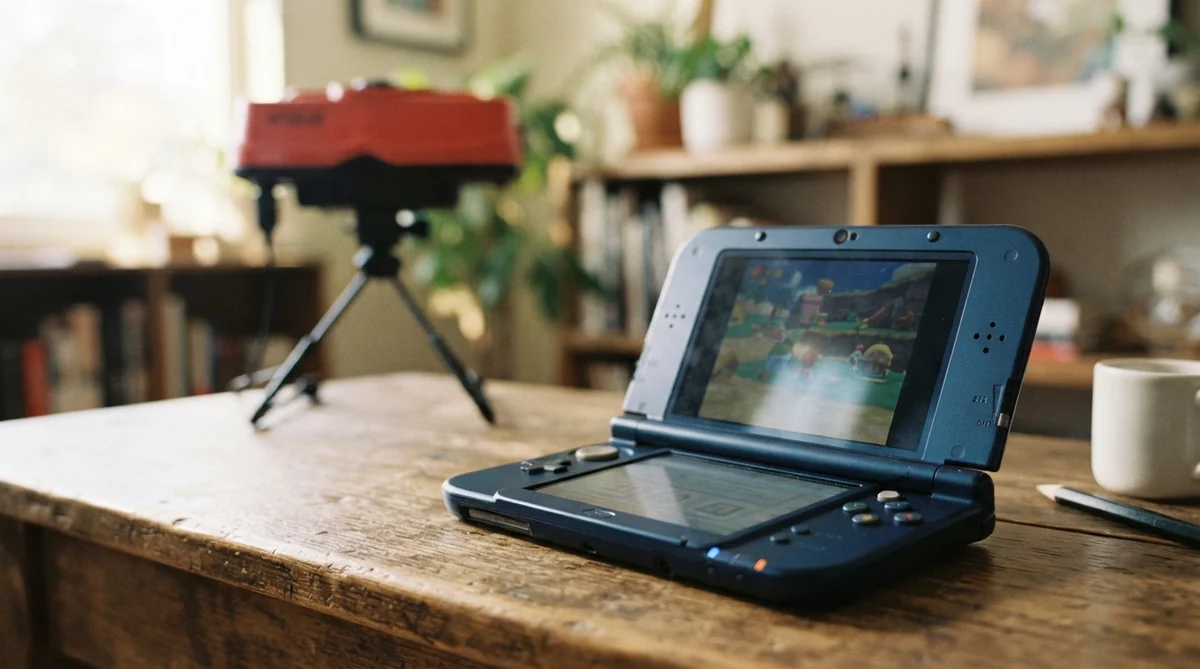
The Nintendo 3DS addressed every major flaw of its spiritual predecessor by utilizing auto-stereoscopic screen technology. Players could enjoy depth perception without wearing cumbersome headsets or resting against rigid plastic stands.
- Glasses-Free Display: Parallax barrier screens enabled 3D visual effects without physical headwear.
- Full Ergonomic Portability: Form factors reverted to comfortable dual-screen clamshell designs.
- Full-Color Graphics: Vibrant screen panels completely eliminated the red LED visual fatigue.
The Virtual Boy’s Modern Legacy and Nostalgia
In 2026, classic gaming enthusiasts view the platform as a fascinating historical anomaly rather than a practical daily gaming option. Original hardware and boxed software cartridges command steep prices among specialized retro collectors.
I spent time testing original titles like Virtual Boy Wario Land and Red Alarm using modern custom backlights, and the underlying game design remains surprisingly sharp despite the restrictive monochrome palette. The software design holds up, even if the physical delivery mechanism remains notoriously flawed.
Fans seeking to explore this library today should prioritize legal options, such as purchasing original physical hardware or utilizing legally extracted personal software dumps with modern virtual reality accessories, avoiding unauthorized digital distributions.